Japanese Milk Bread: Soft Hokkaido Shokupan with Tangzhong
By Mason Brooks
Servings
4
Level
Easy
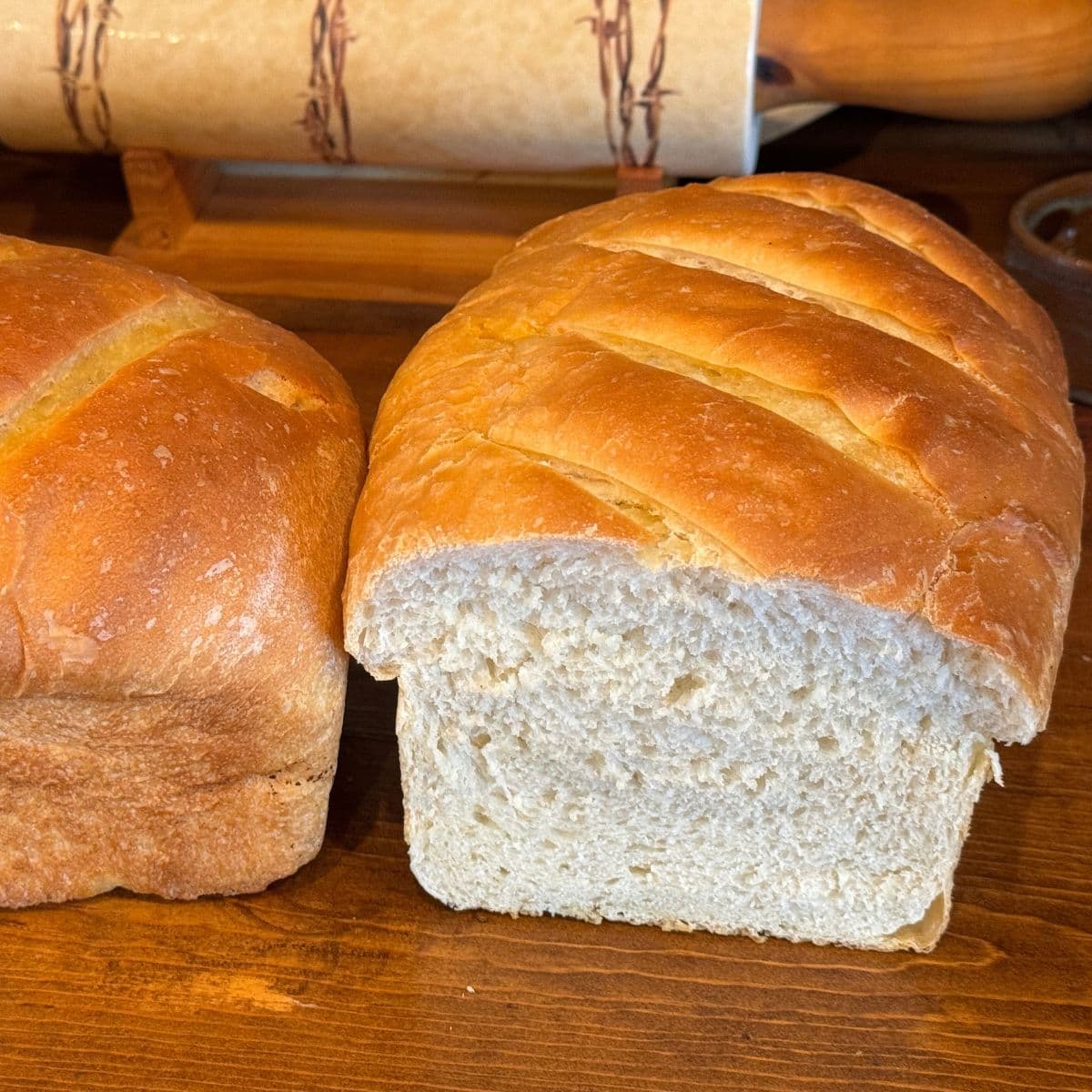
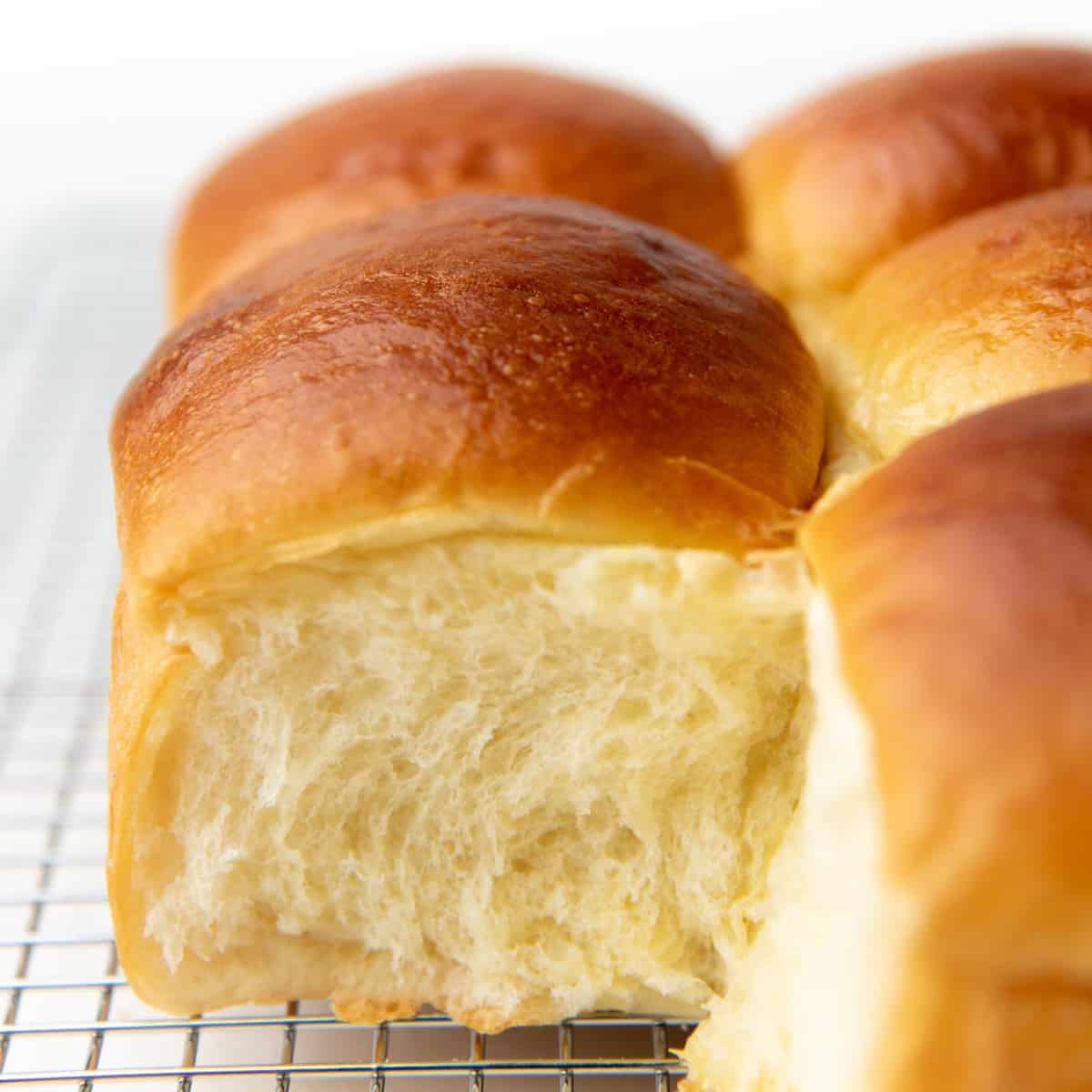
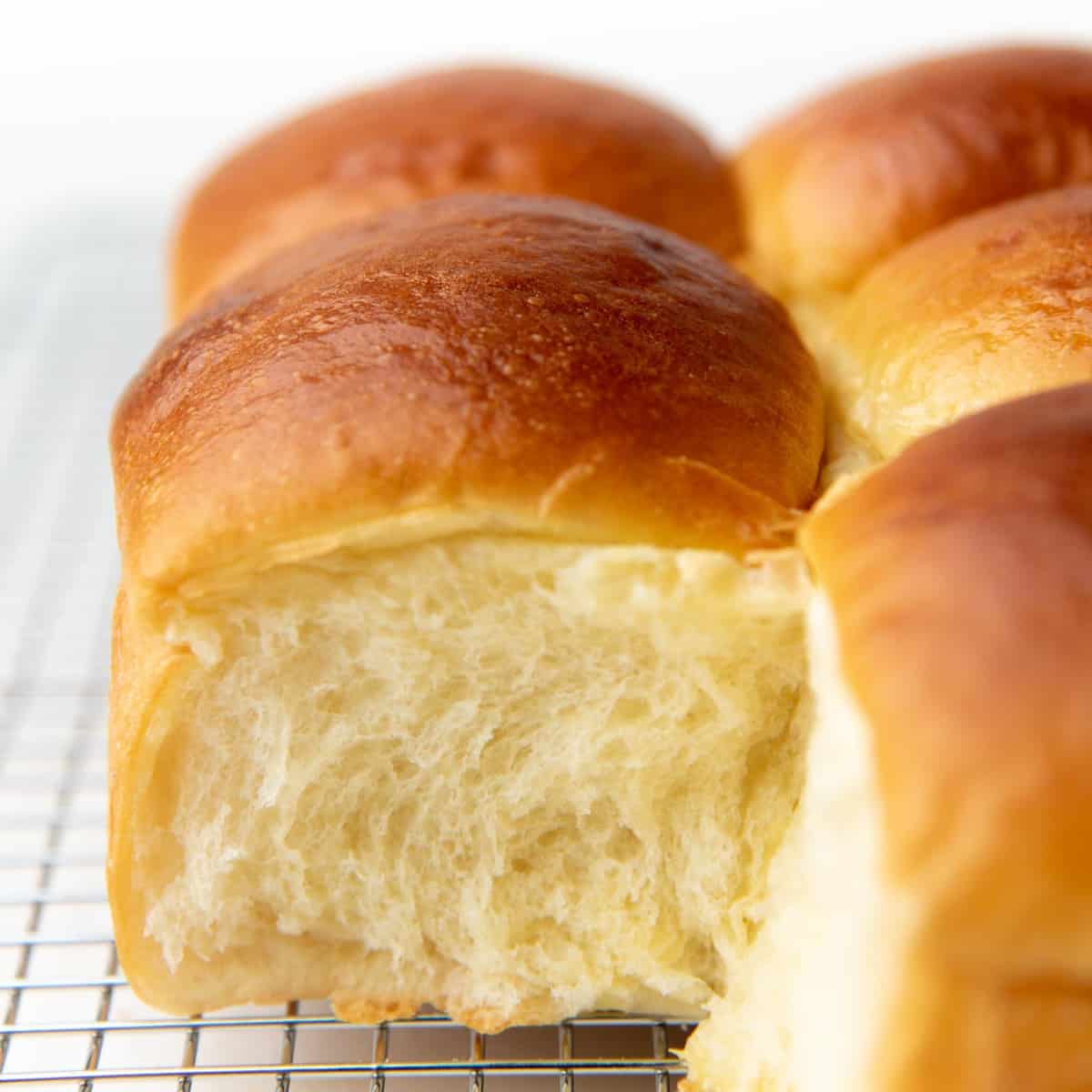
Serve this Japanese milk bread for sandwiches, toast, or warm dinner rolls. Also called Hokkaido milk bread or shokupan, it is a soft, slightly chewy loaf with a notably milky taste and springy crumb, made tender by a cooked flour-and-liquid tangzhong.
Tangzhong starts with flour and liquid cooked into a thick, pudding-like paste, then cooled before it joins the dough. Bread flour supports gluten development for a sturdier loaf, while butter contributes flavor and softness. Dry milk powder is optional but gives the bread a milkier character; evaporated milk may replace the milk in an equal amount.
Expect the dough to begin scraggly and sticky, then become smooth, shiny, tacky, and able to pull from the mixer bowl as kneading develops gluten. Do not rush to add extra flour, since this dough is meant to stay very soft. After proofing, bake until golden brown, covering with foil if further baking is needed.
Shape the dough as a four-piece loaf or divide it into nine rolls for a square pan. Let the bread cool on a wire rack before slicing for cleaner cuts. Serve it with butter, jam, Nutella, or as the base for Japanese egg salad sandwiches.
Why you'll love this recipe
- It suits everyday sandwich making because the loaf has a soft, springy crumb that slices more easily at room temperature without losing its gentle chew.
- Families can choose one loaf or nine dinner rolls from the same dough, making it useful for packed lunches, weeknight meals, or a shared table.
- The tangzhong gives the bread its cushion-like texture by holding extra liquid in the dough, so each slice feels soft rather than dry or crumbly.
- Home bakers get clear visual cues because the dough changes from sticky and scraggly to smooth, shiny, tacky dough during kneading.
- For milk-forward bread fans, dry milk powder adds extra milky flavor and softness, while the recipe still works when that optional ingredient is omitted.
- Leftover slices are practical for toast and sandwiches because the source specifically recommends enjoying this bread as regular sandwich bread after cooling.
Ingredients
- •flour (for tangzhong)
- •water (for tangzhong and optional egg wash)
- •milk (slightly warm; may be replaced with an equal amount of evaporated milk)
- •active dry yeast
- •sugar
- •egg
- •dry milk powder (optional)
- •bread flour
- •salt (add last)
- •butter (add halfway through kneading; use melted and cooled butter for hand kneading)
- •egg yolk (optional for egg wash)
- •cream (optional for milk wash)
Instructions
- 1
Make the tangzhong by whisking flour with part of the liquid until smooth, adding the remaining liquid, and cooking until it becomes a thick, pudding-like paste.
- 2
Transfer the tangzhong to a bowl, cover its surface with plastic wrap, and cool it to room temperature.
- 3
Bring all ingredients except the milk to room temperature, and warm the milk slightly for activating the yeast.
- 4
Activate the yeast in the warm milk if using active dry yeast.
- 5
Add the sugar, cooled tangzhong, egg, dry milk powder if using, bread flour, and salt to the activated yeast mixture, adding the salt last.
- 6
Knead with a dough hook until gluten begins to form, adding the butter halfway through kneading.
- 7
Continue kneading until the dough is soft, shiny, tacky, and pulls away from the sides of the bowl.
- 8
Proof the dough, or use an overnight proofing to chill the dough for easier handling.
- 9
For a loaf, lightly flour the work surface, divide the dough into four equal portions, roll each portion into a rectangle about the width of the loaf pan, and roll tightly while sealing the seam.
- 10
Tuck the ends of each dough roll toward the seam, pinch to seal, and place the smooth tubes seam-side down in a prepared loaf pan.
- 11
Alternatively, form each loaf portion into a 6-inch square, fold opposite corners toward the middle, roll tightly into a spiral, seal the edges, and place seam-side down in the loaf pan.
- 12
For dinner rolls, divide the dough into nine equal portions, tuck each portion's corners toward the center, roll into smooth balls, and place them in an 8- or 9-inch square pan.
- 13
Cover the loaf or rolls with plastic wrap and proof in a warm place until doubled in size.
- 14
Preheat the oven to 350°F / 180°C and brush the proofed dough with egg wash or milk wash.
- 15
Bake the rolls for about 20 to 25 minutes or the loaf for up to 35 minutes, covering with foil if the top browns before baking is complete.
- 16
Bake until the bread reaches an internal temperature of about 190°F / 88°C.
- 17
Rest the baked bread for a few minutes, then turn it out onto a wire rack to cool.
FAQ
Reviews
Pin this recipe
Tap an image to save it to Pinterest.